

Yes, depression can cause brain fog. Trouble thinking, focusing, making decisions, and remembering things is a recognized symptom of depression, not a personal failing. Brain fog is not a formal diagnosis. It is a plain word for a group of thinking problems, and when it comes with depression, clinicians call it cognitive dysfunction. Other things can cause it too, so it is worth having it checked, especially if it lasts.
If your mind feels slow, blurry, or stuck, and your mood has also been low, this guide is for you. It explains what depression brain fog feels like, why it happens, what else can look like it, what helps, and when to get support. It is general education and not a diagnosis.
Can depression cause brain fog?
Depression can cause brain fog. Mood is only one part of depression. Depression also changes how the mind works. Many people notice that they cannot think as clearly, react as fast, or remember as well as they used to.
“Trouble thinking, concentrating, making decisions and remembering things” is on the standard list of depression symptoms. During a depressive episode, symptoms are present most of the day, nearly every day.
Brain fog is also not “all in your head” in the sense of being made up. Research shows depression is linked to real changes in how the brain works, including the areas that handle focus, memory, and planning. Not everyone with depression has brain fog, and it can be mild for some people and heavy for others. But if you have it, it is a common part of the condition.
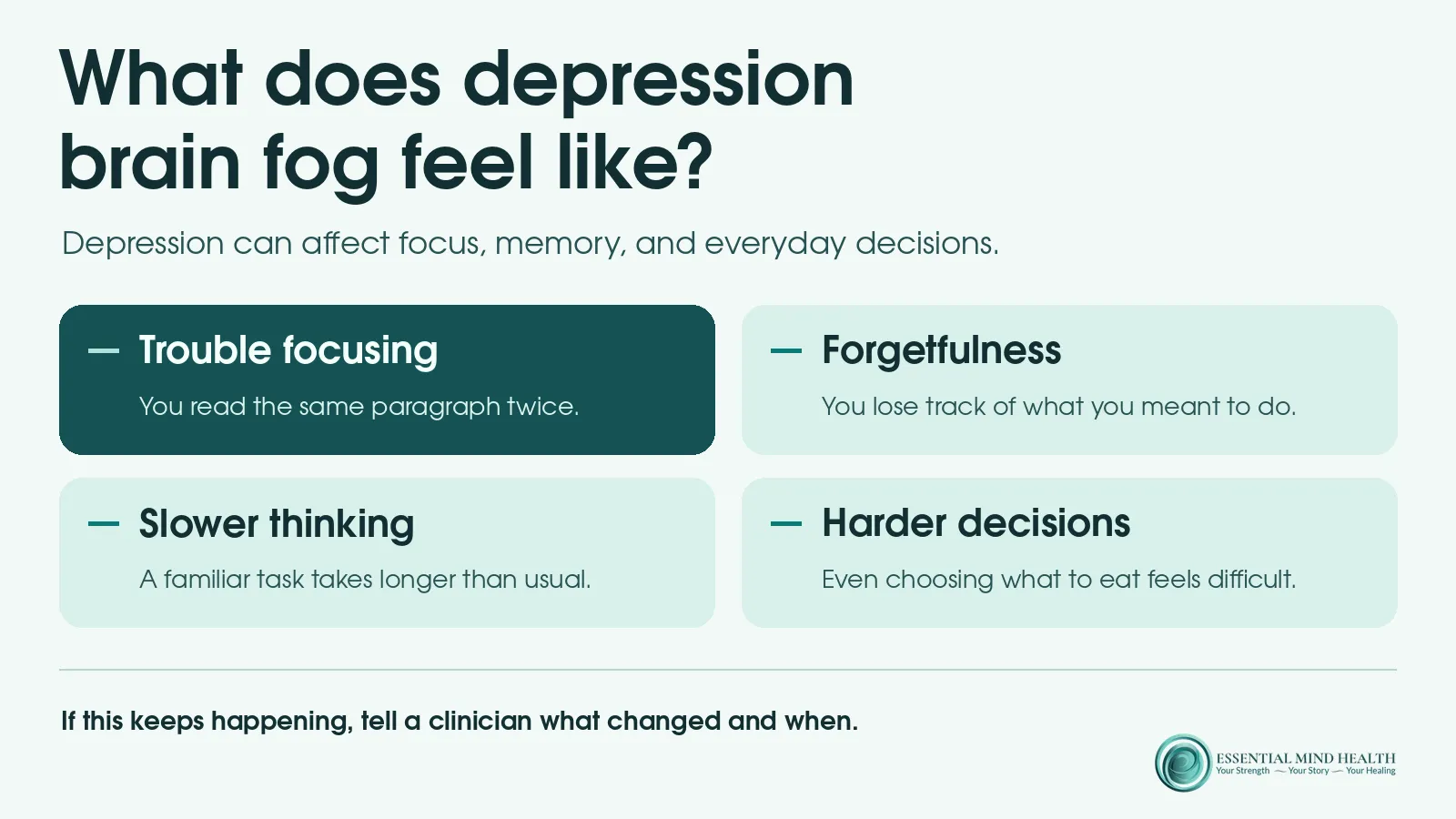
What does depression brain fog feel like?
People describe it in many ways: a head full of cotton, a mind that moves through mud, or a feeling of being “not all there.” Common signs include:
- Trouble focusing. You lose track of a conversation, read the same page again and again, or cannot finish a task.
- Forgetfulness. You forget plans, misplace things, or need to write everything down.
- Slow thinking. Simple tasks take longer than they used to, and managing your time gets harder.
- Hard decisions. Even small choices, like what to eat, feel like too much.
- Word problems. You search for words, or your speech feels jumbled.
- Trouble with planning. Putting steps in order or prioritizing a to do list feels out of reach.
- Feeling distracted. Small noises or thoughts pull you off track.
- Mental blocks. You feel stuck or blank when you try to think.
These problems can come and go from day to day. Some days feel clearer than others. Our post on hidden depression symptoms covers brain fog as one of several signs that people often miss.
Why can’t I focus or remember things when I’m depressed?
Researchers do not have a single answer yet, but several ideas help explain it.
Working memory takes a hit. Working memory is the short term memory you use to hold a thought while you use it, such as remembering a phone number while you dial. Depression often affects this skill first. When working memory is weak, it is hard to follow a conversation, hold a plan in mind, or finish a task.
Brain areas that handle thinking work differently. Depression is linked to changes in the brain areas that handle planning, memory, and emotion. In studies, people with depression often needed to use extra brain effort to do the same memory task as people without depression. That extra effort can feel like mental tiredness.
Stress and thinking share the same circuits. The brain systems that manage stress also support thinking. High stress can weaken thinking and make mood worse, which feeds the cycle.
Brain chemistry changes. Depression is linked to changes in the brain’s chemical messengers, which may make it harder for brain cells to talk to each other.
Sleep, energy, and worry get in the way. Depression often brings poor sleep, low energy, and constant worry. All of these use up mental energy that you need to think clearly. Our guides on why depression makes you tired and sleep and mental health explain how.
None of this means you are not trying hard enough. Brain fog from depression is a symptom, and symptoms can be treated.
How common is brain fog in depression?
It is common. Studies suggest that up to three in five people with depression may have thinking or memory problems. The size of the problem varies a lot from person to person. Some people notice a small dip. Others find it hard to work, study, or manage daily tasks.
Research also suggests that these problems tend to be smaller during a first episode of depression and larger with more severe symptoms or repeated episodes. If you feel your thinking has slipped, you are not alone, and it is not a sign that you are failing.
Which thinking skills does depression affect most?
Depression does not blur everything evenly. Some skills are hit harder than others. Here is a simple guide:
| Thinking skill | What it does | What it can feel like with depression |
|---|---|---|
| Attention | Keeps you focused | You lose your place, get distracted easily |
| Working memory | Holds information in mind for a moment | You forget what you were about to say or do |
| Processing speed | How fast you take in and respond | Everything feels slow, replies take longer |
| Planning and organizing | Puts steps in order | A simple to do list feels huge |
| Decision making | Weighs choices | Even small choices feel exhausting |
| Switching tasks | Moves from one task to another | You get stuck and cannot shift gears |
These skills are sometimes grouped as “executive function.” That is the part of thinking that helps you plan, prioritize, and get things done.
Is it depression brain fog, or just being tired or stressed?
Everyone has foggy days. Poor sleep, stress, a busy week, or a cold can cloud your thinking. The difference with depression is how long it lasts and what travels with it.
| Everyday fog | Depression brain fog | |
|---|---|---|
| Length | A few days, often tied to a clear cause | Weeks or longer |
| Mood | Mostly normal | Low, empty, numb, or irritable |
| Interest in life | Still there | Fading |
| Rest helps? | Usually yes | Often not much |
| Daily life | You can keep up | Work, school, or home tasks start to slip |
Ask yourself:
- Has the fog lasted more than two weeks?
- Do I also feel sad, empty, numb, or hopeless most of the day?
- Have I lost interest in things I normally enjoy?
- Are my sleep or appetite different from usual?
- Is my thinking affecting work, school, or relationships?
If you said yes to several of these, it is a good idea to talk to a professional. For depression to be diagnosed, several symptoms need to be present most of the day, most days, for at least two weeks, and thinking trouble is one of the listed symptoms.
Depression does not always look like sadness. Our post on why depression sometimes shows up as irritability or numbness explains other ways it can appear.
What else can cause brain fog besides depression?
Brain fog can have causes other than depression, even in someone who also has depression. Doctors may look at:
- Thyroid problems
- Anxiety. Worry and tension use up focus and can mimic or add to depression related fog.
- A recent illness, including COVID-19
- Head injuries or other brain injuries
- Poor or broken sleep
If a doctor cannot explain your symptoms by depression alone, they may look into these other causes. This is one reason a full check up matters. Treating depression will not fully clear the fog if another cause is part of it.
If worry and low mood come together, our guides on depression and anxiety and emotional exhaustion may be useful.
Could it be a memory disorder and not depression?
This question comes up most often in older adults. Depression and memory problems can look alike, and it is not always easy to tell them apart.
Doctors have noticed some differences. When thinking problems come from depression, they often involve planning, slower thinking, attention, and some memory trouble. People may report “fuzziness,” but when tested, they often can recall words if given a small hint. In early memory disorders, hints usually do not help. Depression related problems can stay for a long time, but they usually do not show the steady decline seen in degenerative brain disease.
A history of depression is also worth mentioning to your doctor if memory worries are new. Do not try to sort this out alone. If you are worried about your memory, start with your regular doctor and tell them about both your mood and your memory. A full check can find out what is behind it.
Can brain fog last after your mood gets better?
Yes. Brain fog can linger even after other depression symptoms improve. Thinking and memory problems can start when depression starts, and they can continue after sadness and other symptoms lift. Researchers see this in studies, and it can be frustrating.
If brain fog continues after your mood has improved, tell your professional. They may look at other causes, adjust your care, or add support aimed at thinking skills. Lingering brain fog is not a sign that you are not recovering or that you are doing something wrong.
Does depression brain fog go away?
For many people, it improves. When brain fog is linked to depression, treating the depression may help the fog too. Untreated depression usually brings more intense and lasting symptoms, so getting care early matters.
How fast it improves differs from person to person. Some people notice clearer thinking within weeks as mood, sleep, and energy improve. For others, the fog fades more slowly, or lingers after the mood lifts.
Our guides on how long a depressive episode lasts and whether depression goes away on its own go deeper on timing.
What can you do at home when your brain feels foggy?
These steps do not replace care, but they can make your days easier.
Move your body. Regular physical activity is linked to better working memory, faster processing, and better attention. Even a short daily walk counts.
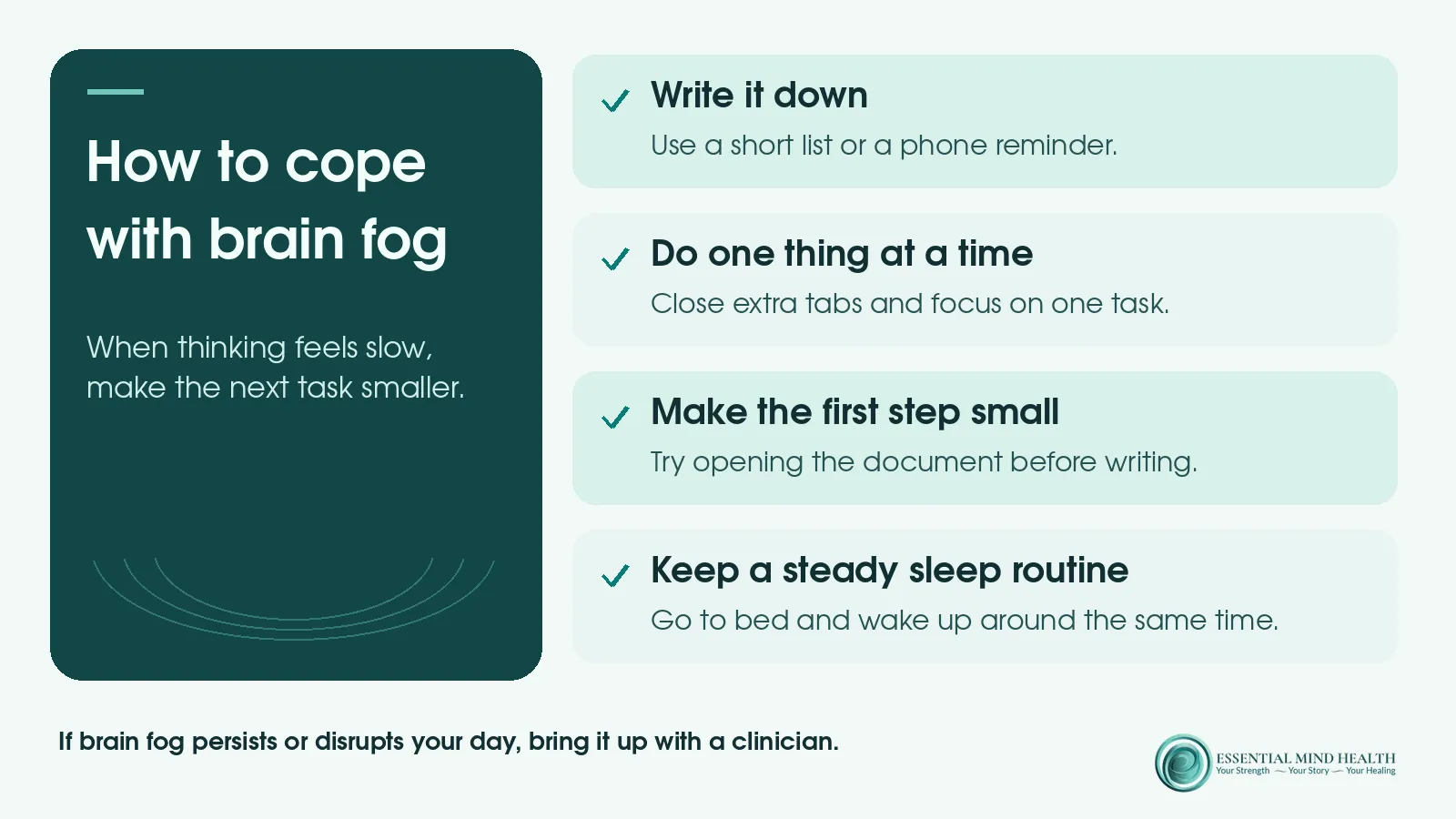
Protect your sleep. Keep a steady sleep and wake time. Poor sleep makes foggy thinking worse.
Manage stress. Slow breathing, meditation, or other calming habits can ease the mental load.
Limit caffeine, alcohol, and sugar. These can disturb sleep and mood, which can make the fog worse.
Eat regular meals. A nutrient dense diet supports steady energy.
Make thinking easier. Use notes, phone reminders, and a simple calendar so your brain does not have to hold everything.
Do one thing at a time. Switching between tasks is harder when you are depressed. Pick one task, finish it, then move on.
Break big tasks into small steps. A short, clear list is easier than a large goal.
Be patient with yourself. Experts say patience matters, because coping with brain fog can be frustrating and discouraging.
Some people also try simple brain exercises, such as computer based games, which can help working memory and attention. These can be an extra, but they work best alongside care for the depression itself.
How does therapy help with depression brain fog?
Talk therapy is a first line treatment for depression, and it can help with brain fog too. Several kinds of therapy are used, including cognitive behavioral therapy (CBT), behavioral activation, interpersonal therapy, and others.
CBT may be especially helpful for brain fog linked to depression. It teaches practical skills, such as breaking tasks into steps, noticing unhelpful thought patterns, and planning your day. Behavioral activation helps you rebuild daily activity in small steps, which supports mood and energy.
Research also links talk therapy with more activity in the brain area that helps with flexible thinking. That may help explain why people often feel sharper as therapy goes on.
To learn how therapy works, read our guides on how therapy works and the benefits of cognitive behavioral therapy. You can also see our guide on depression treatment options for adults.
When should you see a professional about brain fog?
If you feel depressed, make an appointment with your doctor or a mental health professional as soon as you can. Do not wait for the fog to get worse.
It is a good idea to reach out if:
- Brain fog lasts more than two weeks
- Your mood is low, empty, or numb most days
- Your work, school, or home life is slipping
- Brain fog continues after other depression symptoms have eased
- You feel worried about your memory
If you feel reluctant, you can start by talking to a friend, a loved one, or someone you trust. Saying it out loud is a real first step.
When you go, describe all your symptoms, not only the mood. Mention sleep, appetite, energy, worry, and any recent illness. A fuller picture helps a professional find the real cause.
What should you tell a professional about brain fog?
Clear details help a professional work out what is going on. Before your visit, try to jot down:
- When it started. Did the fog begin with the low mood, before it, or after?
- What it looks like day to day. For example, losing your place in a conversation, forgetting tasks, or needing much longer to finish work.
- How it changes. Is it worse at certain times of day, after poor sleep, or during stressful weeks?
- Your sleep and energy. How many hours you sleep, how rested you feel, and whether your appetite has changed.
- Other symptoms. Low mood, worry, numbness, irritability, or loss of interest.
- Recent changes. Illness, injuries, big life events, or heavy stress.
- Your history. Past episodes of depression or anxiety, and any family history of mood conditions.
You do not need to have perfect answers. Rough notes are enough. It also helps to bring one example of how the fog affected something that matters to you, such as work or school.
How can family and friends help someone with depression brain fog?
Brain fog can be confusing for the people around you. A forgotten plan or a slow reply can look like carelessness when it is really a symptom. These steps can help loved ones:
- Do not take it personally. Forgetfulness and slow replies are part of the symptom, not a sign that the person does not care.
- Keep requests short and clear. One simple request at a time is easier to follow than a long list.
- Offer gentle reminders. A shared calendar or a short written note can take pressure off memory.
- Help with small tasks. Offering to make a call or fill out a form can lift a heavy load.
- Be patient. Frustration usually makes the fog worse, not better.
- Encourage support. Let the person know that depression can be treated and that thinking problems are part of it. Offer to help them book a visit.
If you are the one with brain fog, you can share this list with the people close to you. It can make it easier to ask for the help you need.
How can Essential Mind Health help with depression brain fog in Jupiter?
Essential Mind Health provides depression therapy and care in Jupiter, FL for adults 18 and older. Here is what to expect:
- A full depression evaluation. The first visit covers your symptoms, history, and goals, so your care fits what you are going through.
- Talk therapy. Therapy can help with low mood, worry, and the thinking problems that come with them.
- Care for many forms of depression. Support covers major, persistent, seasonal, postpartum, and bipolar depression, as well as depression with anxiety or poor sleep.
- A board certified provider. Jennifer Caschetta, PMHNP-BC, is a board certified Psychiatric Mental Health Nurse Practitioner with over 18 years of nursing experience. You can read more on the our provider page.
- Visits in person or by video. Meet face to face at 600 Heritage Dr, Suite 210, Jupiter, FL, or join by secure telehealth video from home.
Start on our depression therapy in Jupiter page. If brain fog comes with worry or poor sleep, see anxiety therapy in Jupiter and insomnia therapy in Jupiter.
Nearby, we also offer online care through our online depression treatment in Palm Beach Gardens and online depression treatment in West Palm Beach pages. You can also browse our services and blogs.
Ready to talk? Call (561) 954-5123 to schedule your first visit, or contact us.
When is brain fog and low mood an emergency?
If you have thoughts of ending your life or hurting yourself, do not wait for an appointment. In the U.S., call or text 988 to reach the 988 Suicide and Crisis Lifeline. It is free, confidential, and open 24 hours a day, seven days a week. In a life threatening emergency, call 911.