
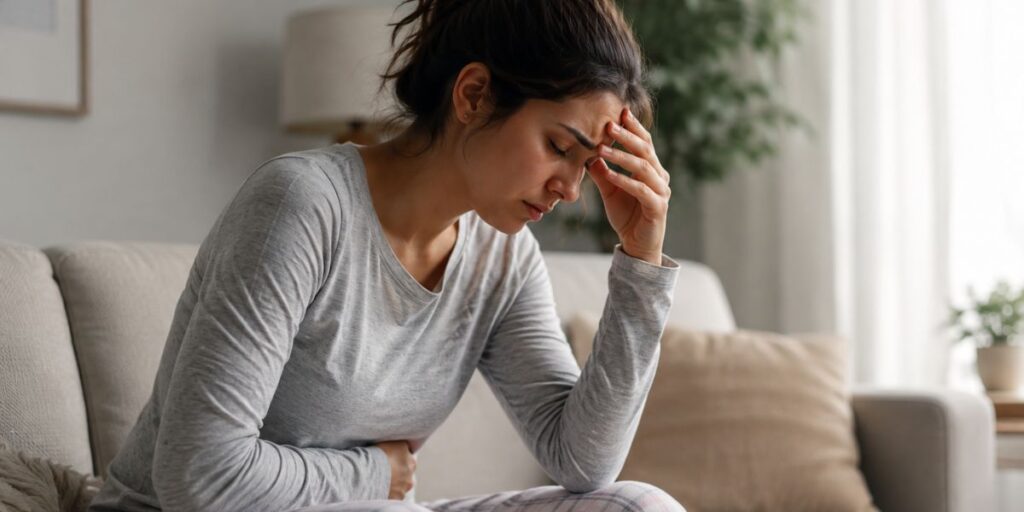
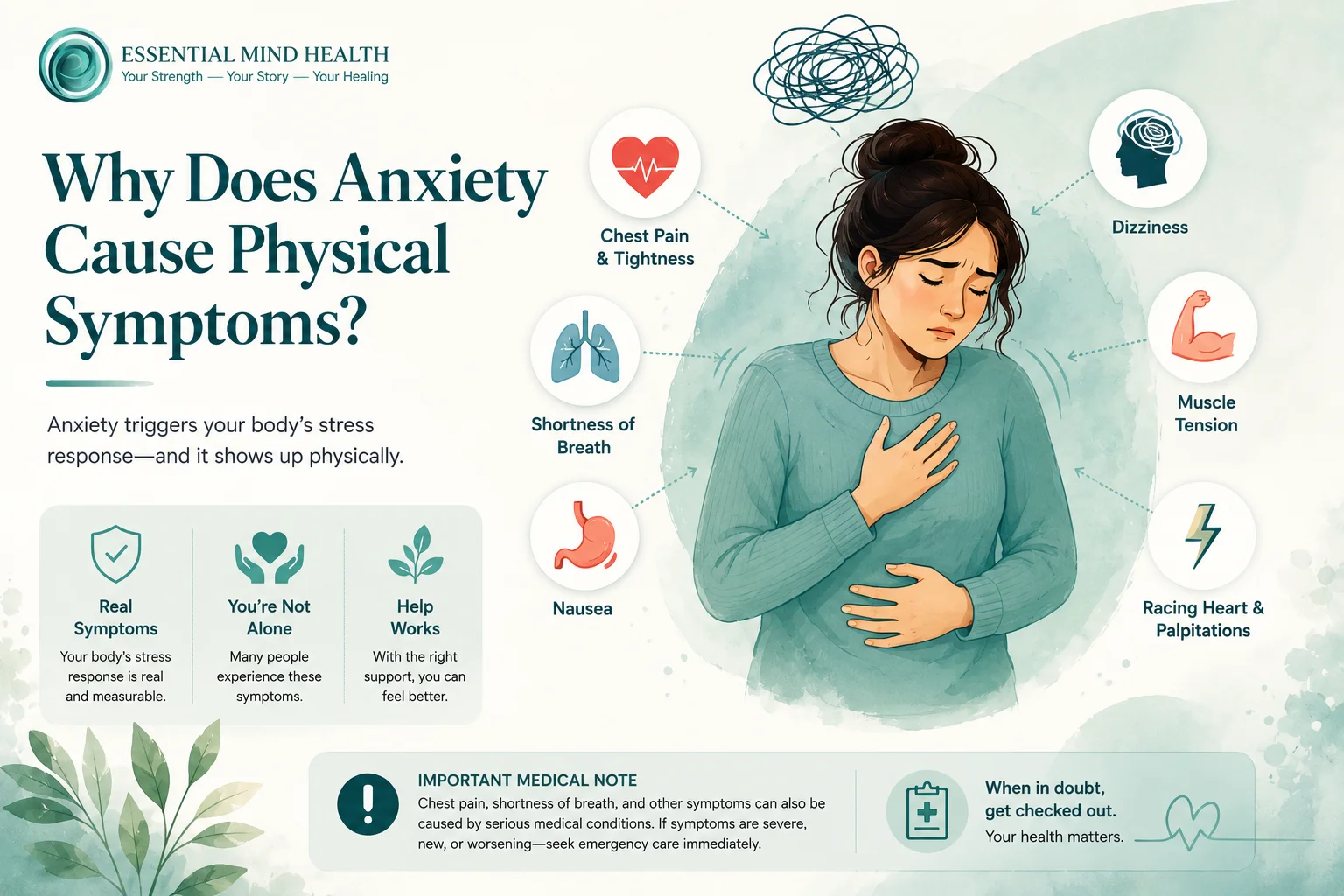
Anxiety causes physical symptoms because it triggers a genuine, measurable physiological stress response not an imagined one. When the brain perceives a threat, it activates the sympathetic nervous system, releasing adrenaline and cortisol that directly affect the heart, lungs, digestive system, muscles, and blood vessels. The result is real physical experiences: chest tightness, nausea, shortness of breath, dizziness, stomach pain, and more. These symptoms are not exaggerated or “in your head” they are produced by the same biological mechanisms that would activate in a genuine physical emergency. This guide explains exactly what anxiety does to the body, why each physical symptom occurs, and when physical symptoms are a signal to seek professional support.
Medical Disclaimer: The information in this article is provided for general informational purposes only and should not be used as a substitute for professional medical advice, diagnosis, or treatment.
Why Anxiety Is Not “Just in Your Head”
The phrase “it’s just anxiety” implies that physical symptoms are not real, that they are a mental event misinterpreted as a physical one. This framing is inaccurate and unhelpful.
Anxiety is a whole-body response. The brain and body are not separate systems that communicate occasionally. They are in continuous, bidirectional communication through the nervous system, the endocrine system, the vagus nerve, and dozens of other pathways. When the brain’s threat-detection system activates whether the threat is a car swerving toward you on the highway or a meeting that has been filling you with dread for three days the body responds immediately and physiologically.
The physical symptoms of anxiety are produced by real hormonal changes, real alterations in heart rate and blood pressure, real shifts in blood flow, and real changes in the digestive and respiratory systems. They are measurable. They are predictable. And they are not a sign that something is wrong with your capacity to handle stress they are the body doing exactly what it evolved to do, in a context where that response is no longer useful.
The Mechanism: What Happens in the Body When Anxiety Activates
Every physical symptom of anxiety traces back to one central event: the activation of the hypothalamic-pituitary-adrenal (HPA) axis and the sympathetic nervous system collectively, the fight-or-flight response.
Here is the sequence:
- The amygdala the brain’s threat-detection centre identifies a real or perceived threat
- It sends an emergency signal to the hypothalamus, which acts as the command centre for the stress response
- The hypothalamus activates the sympathetic nervous system, which sends signals through the nerves throughout the body simultaneously
- The adrenal glands release adrenaline (epinephrine) and cortisol into the bloodstream
- These hormones produce a cascade of physiological changes throughout the body within seconds
The purpose of these changes, evolutionarily, was to prepare the body for immediate physical action fighting or fleeing a physical threat. The problem is that the same response activates for psychological threats, social fears, anticipated stressors, and chronic worry and for these, the physiological preparation for physical action is not useful. The heart is racing, but there is nowhere to run. The muscles are tense, but there is nothing to fight. The body is preparing for an emergency that is not physical and the physical symptoms are the cost of that mismatch.
The Most Common Physical Symptoms of Anxiety Explained
Chest Pain and Chest Tightness
Chest pain is one of the most alarming physical symptoms of anxiety and one of the most misunderstood, because it genuinely resembles cardiac symptoms.
Anxiety produces chest pain through several mechanisms simultaneously:
Muscle tension: The chest wall muscles, the intercostal muscles between the ribs and the muscles of the sternum tighten significantly during the stress response. This sustained tension produces a dull ache or pressure across the chest that can persist for hours after the acute anxious moment has passed. Costochondritis inflammation of the cartilage connecting the ribs to the breastbone is associated with chronic muscle tension and produces a sharp, point-specific chest pain that worsens with deep breaths or pressure.
Heart rate changes: Adrenaline directly increases heart rate. A heart beating faster and harder produces sensations pounding, palpitations, a sense of fluttering or racing that are alarming when they occur without an obvious physical cause. These sensations are real and can be intense.
Blood vessel constriction: The stress response constricts peripheral blood vessels to redirect blood toward the muscles. This increases blood pressure and can produce a squeezing or tight sensation in the chest.
The critical distinction is this: if chest pain is new, severe, crushing, or accompanied by sweating, radiating arm or jaw pain, or significant breathlessness, seek emergency evaluation immediately. Anxiety chest pain does not confirm the absence of a cardiac cause. Once cardiac causes have been ruled out by a medical provider, recurring chest pain in the context of anxiety is addressable through treatment.
Nausea and Stomach Pain
The gut has its own nervous system, approximately 500 million neurons lining the digestive tract, sometimes called the “second brain.” This enteric nervous system is in constant, bidirectional communication with the brain through the vagus nerve.
When anxiety activates the stress response, the digestive system is directly affected:
- Blood flow shifts away from the gut toward the muscles needed for action, disrupting normal digestive function
- The muscular contractions that move food through the digestive tract become erratic speeding up in some people (producing diarrhoea and urgency), slowing in others (producing constipation and bloating)
- The stomach produces more acid under cortisol stimulation, which can cause nausea and reflux
- Gut pain sensitivity increases normal digestive sensations become more noticeable and uncomfortable
Nausea is often one of the fastest anxiety symptoms to appear. The vagus nerve transmits stress signals from the brain to the gut within seconds, which is why the sick feeling before a difficult conversation or a presentation can arrive almost simultaneously with the anxious thought.
For a deeper look at the gut-brain connection and how anxiety affects digestion, our post on what anxiety feels like every day covers how physical symptoms manifest across daily life.
Shortness of Breath and the Feeling of Not Being Able to Breathe
Anxiety changes breathing in two ways: it makes it faster and shallower. The goal, evolutionarily, is to increase oxygen delivery to the muscles for action. When that action does not occur, the change in breathing produces its own cascade of symptoms.
Hyperventilation breathing faster than the body’s metabolic needs reduces carbon dioxide levels in the blood. This shift in blood chemistry (called hypocapnia) produces lightheadedness, tingling in the hands and face, a feeling of unreality, and paradoxically, a sense of difficulty breathing even though air is moving freely. The sensation of not being able to get a full breath, despite breathing being functionally normal, is one of the most distressing and confusing anxiety symptoms.
Thoracic breathing shallow chest breathing rather than diaphragmatic belly breathing is the default during the stress response. Sustained thoracic breathing maintains a mild hyperventilation pattern and keeps the body in a state of elevated arousal.
Dizziness and Lightheadedness
Dizziness during anxiety has multiple contributing causes:
The shift in blood flow during the stress response toward the muscles, away from non-essential systems can briefly reduce blood flow to the brain. Combined with the effects of hyperventilation on blood chemistry, this produces lightheadedness, a sense of the room tilting, or feeling faint.
Dizziness is also closely associated with hyperventilation. If dizziness consistently appears during periods of acute anxiety, breathing rate and depth are the first things worth examining.
Trembling and Muscle Tension
Adrenaline causes muscles to contract in preparation for physical action. When action does not follow, the contracted muscles produce visible trembling particularly in the hands and sustained tension across the shoulders, neck, jaw, and back.
Chronic anxiety keeps this tension partially activated over long periods. The resulting muscle fatigue, tension headaches, jaw soreness, and back pain are expressions of a stress response that has been running at a low level continuously rather than activating and resolving in response to a discrete event.
Sweating and Hot or Cold Sensations
The stress response opens the sweat glands partly to cool the body anticipating physical exertion, and partly because the skin’s surface blood flow changes rapidly during the sympathetic activation. People with anxiety often notice excessive sweating, particularly on the palms, under the arms, and on the forehead, in situations that do not involve physical exertion.
The rapid changes in peripheral blood flow constricting during acute stress, then redistributing as the response begins to resolve also produce sensations of sudden heat or cold, chills, and flushing.
Heart Palpitations
Palpitations, the awareness of your own heartbeat, often described as fluttering, pounding, or skipping are one of the most common anxiety symptoms and one of the most alarming, because they invite the same secondary anxiety (worry about the heart) that chest pain does.
Adrenaline increases both heart rate and the force of cardiac contraction. Both of these changes can produce palpitations. The heart is working harder than it usually does at rest, and this is noticeable in a way that the normal resting heart rate is not.
Like chest pain, palpitations in someone without a cardiac history are almost always benign and anxiety-related. Like chest pain, they warrant medical evaluation if they are new, severe, accompanied by dizziness or fainting, or if you have a known cardiac history or risk factors.
Frequent Urination
The bladder is sensitive to the stress response; the urge to urinate increases under sympathetic activation, which is why many people find themselves needing the bathroom before anxiety-provoking events. This is not a coincidence and not a weakness; it is a documented physiological response to the stress hormones circulating in the body.
Fatigue After an Anxiety Episode
The physical cost of sustained anxiety is real. Keeping the body in a state of stress-response activation even at a low level consumes energy. People with chronic anxiety often experience a fatigue that is disproportionate to their activity level, because a meaningful portion of their physiological resources are being consumed by an ongoing stress response rather than by physical exertion.
Why These Symptoms Can Become Self-Sustaining
One of the more important things to understand about anxiety’s physical symptoms is how they can become their own anxiety trigger creating a feedback loop that maintains and deepens the anxiety.
Here is the cycle:
- Anxiety produces a physical symptom chest tightness, a racing heart, nausea
- The symptom is noticed and interpreted as alarming (“Is something wrong with my heart?”)
- The interpretation increases anxiety
- Increased anxiety amplifies the physical symptom
- The amplified symptom produces more alarm and the cycle continues
This is particularly common with chest pain, palpitations, and breathlessness symptoms that overlap enough with serious medical conditions to produce genuine fear in the absence of a clear explanation. Health anxiety persistent worry about physical symptoms and their potential medical significance is often developed or maintained through exactly this pattern.
The cycle is not a personal failure. It is a predictable consequence of a threat-detection system scanning for danger and finding its own output.
The Difference Between Chronic and Acute Physical Symptoms
Not all physical symptoms of anxiety present in the same way. There is an important distinction between:
Acute anxiety symptoms those that occur during or immediately after a spike in anxiety, resolve as the anxiety resolves, and are clearly linked to a specific trigger or episode. Racing heart before a presentation, nausea before a difficult conversation, dizziness during a panic attack. These are proportionate (if uncomfortable) expressions of the stress response doing what it was designed to do.
Chronic anxiety symptoms are those that are persistently present even when no specific stressor is active, because anxiety itself has become a sustained baseline state rather than a discrete response. Constant low-level muscle tension, persistent fatigue, ongoing digestive disruption, chronic headaches. These reflect a stress response that has been running continuously rather than activating and resolving in discrete episodes.
The physical symptoms of chronic anxiety are often harder to connect to anxiety as a cause precisely because they are not obviously linked to anxious moments. They are the physical cost of sustained physiological activation and they are part of why untreated anxiety produces real, measurable health consequences over time.
When to See a Doctor vs. When to Seek Mental Health Support
Both ideally, in sequence.
See a doctor first if:
- Physical symptoms are new, severe, or worsening
- You have never been evaluated for cardiac, respiratory, or gastrointestinal causes
- Symptoms are significantly affecting your daily functioning
- You have risk factors for the conditions these symptoms resemble (cardiac history, family history of heart disease, etc.)
Ruling out medical causes before attributing symptoms to anxiety is not optional it is the responsible sequence. Physical symptoms of anxiety and physical symptoms of medical conditions overlap genuinely. Medical evaluation comes first.
Seek mental health support when:
- Medical causes have been ruled out and anxiety is identified as the driver
- Physical symptoms are occurring in a consistent pattern with anxiety episodes or chronic worry
- The cycle of physical symptoms producing fear, which amplifies the symptoms, has become established
- Physical symptoms are beginning to affect what you do avoiding situations, checking your own pulse, reducing activity for fear of triggering symptoms
Medication, therapy, or both are effective for anxiety with significant physical symptoms. SSRIs and SNRIs reduce the baseline activation of the stress response and the intensity of physical symptoms over time. Therapy particularly CBT addresses the thought patterns and behavioural responses that sustain the anxiety-symptom cycle. The right combination depends on the severity of symptoms and what fits your situation, which is a conversation worth having with a provider rather than deciding alone.